



 Two main design philosophies operate in inkjet head design with each having its strengths and weaknesses.
With a fixed (or Gaither) print head the idea is to have the printhead last for the entire life of the printer. This results in lower consumable production costs as the print head doesn’t need to be replaced every time the cartridge runs out. The disadvantage of this is that if the printer head is damaged it usually results in the entire printer having to be replaced. Epson have traditionally used fixed print heads with Canon also making many of their printers in the same fashion.
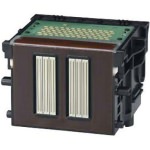
The disposable head philosophy uses a print head which is part of the replaceable ink cartridge which means that every time the printer runs out of ink, the entire cartridge is replaced with a new one. Of course this does add to the cost of the replacement cartridges and also has the added disadvantage that the manufacture would find it difficult to produce a high-precision head within reasonable a cost limit. The advantage is that a damaged print head means that you simply buy a new cartridge rather than having to replace the whole machine as would be necessary with a fixed print head design. Hewlett-Packard and Lexmark have traditionally favoured the disposable print head, as did Canon in its earlier models.
There is another method which uses a combination of both; a disposable ink tank connected to a disposable head. The print head isn’t replaced as often as the ink tanks are and whilst this can offer the best of both worlds this method is used in very few machines.

